Interstate bridge · I-95 and US 17
Driving I-95? Route 17 can tell you when it is worth getting off.
You do not have to choose between an efficient interstate trip and a slower coastal-road trip. In Georgia and South Carolina, I-95 can handle the long mileage while Route 17 helps you decide which towns, marsh landscapes, historic stops, and overnight breaks deserve time away from the freeway.
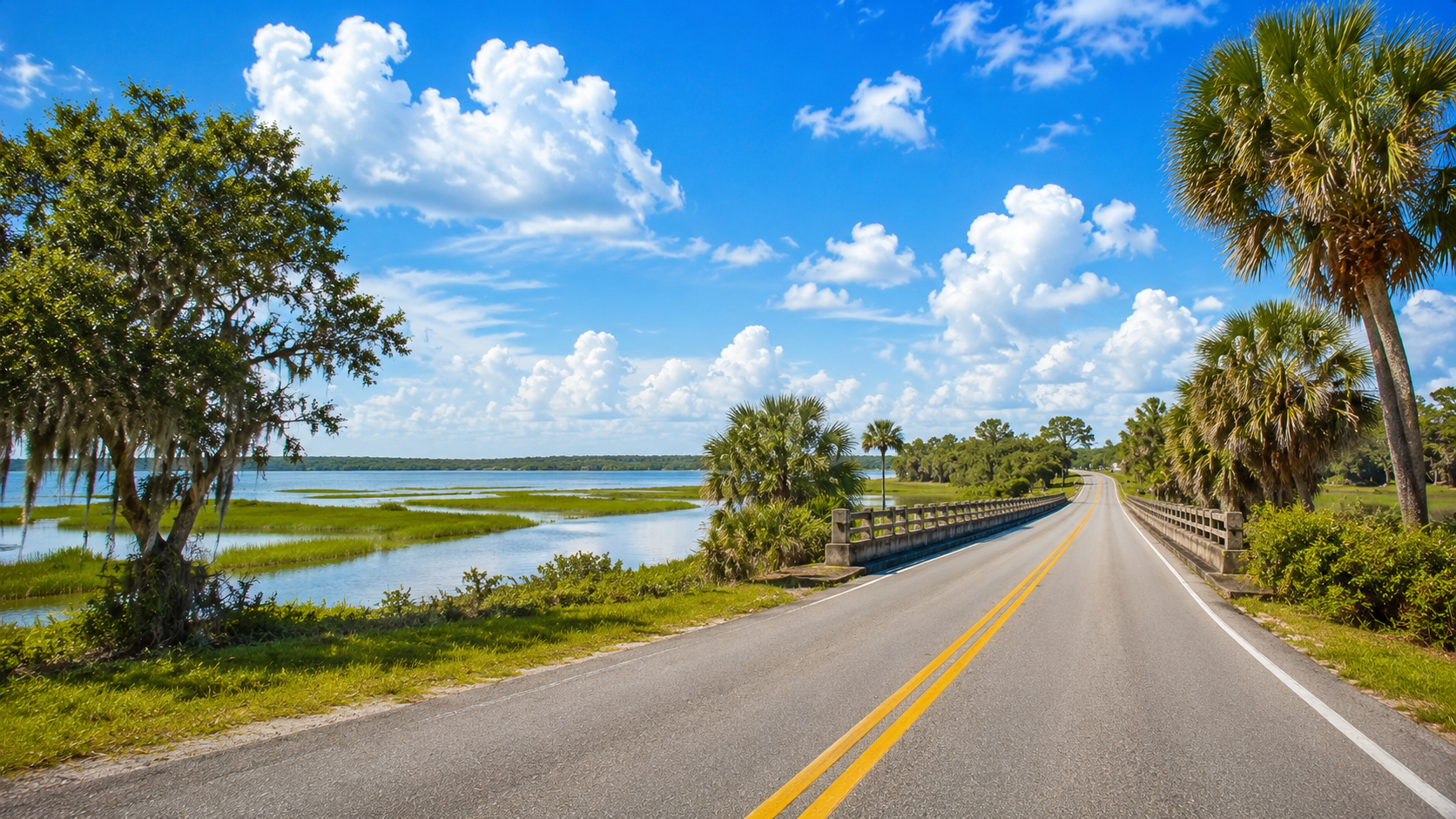
The road-trip choice is not binary
A Route 17 trip does not stop being useful because part of the day happens on I-95. The two roads solve different problems.
I-95 is often the better tool when the priority is covering ground, protecting an arrival time, or moving between larger regions. Route 17 is the better planning layer when the question changes from How fast can I get there? to What is worth seeing before I get there?
That makes a hybrid trip legitimate: use the interstate for the long middle, then leave it when a town, waterfront, historic district, meal stop, scenic stretch, or overnight has a clear reason to earn the slower mileage.
Interstate-first
Protect the schedule
Stay on I-95 when arrival time is the controlling decision. Use the Route 17 guide to choose one worthwhile departure instead of turning every exit into a detour.
Route-first
Let the coast be the trip
Stay with Route 17 when marshes, river towns, coastal cities, and the older road are the reason you are traveling rather than scenery between interstate stops.
Georgia: use I-95 to cover ground, then choose the coastal layer on purpose
The Georgia coast is one of the clearest places to use the two-road strategy. An interstate-first traveler can keep I-95 for the fast north-south movement, then use the Route 17 layer when Brunswick, Darien, the Altamaha corridor, Savannah, or a coastal overnight is the real reason to slow down.
The point is not to leave the interstate simply because Route 17 exists. The point is to leave when the stop has a job.
- Brunswick can be a substantial coastal-city stop or an overnight base. Start with the Brunswick guide.
- Darien and the Altamaha area make sense when marsh scenery, small-town scale, and the historic/scenic corridor are part of the day rather than an incidental roadside pause.
- Savannah deserves enough time to function as a destination. If the city is in the plan, do not reduce it to a hurried interstate meal stop.
For the larger road shape, open the Georgia Route 17 guide and the Jacksonville–Brunswick–Savannah coastal approach.
South Carolina: the useful handoff is into the Lowcountry
Crossing into South Carolina does not mean I-95 and Route 17 become interchangeable. The interstate remains the through-driving tool; Route 17 becomes more valuable when the day is about Lowcountry places and coastal movement.
Hardeeville, Ridgeland, and Point South are useful orientation points because they sit in the southern Lowcountry decision zone. From there, the trip can remain interstate-first or become a more deliberate Route 17 chapter toward coastal destinations.
The important planning question is not Which road is better? It is What deserves the time?
If Charleston is the destination, make the city the anchor rather than trying to collect several minor stops on the way. If the day continues up the coast, Georgetown and Myrtle Beach become different kinds of Route 17 decisions. The South Carolina guide gives the broad state shape, while the Savannah-to-Charleston trip shows how to keep one regional chapter manageable.
A simple rule: every interstate exit should earn its place in the itinerary
A good hybrid day usually needs only one or two reasons to leave the freeway. Those reasons can be different depending on the trip:
Quick reset
Food, fuel, stretch, continue
Choose a stop that solves the practical need without pretending every break must become sightseeing.
Scenic chapter
Give Route 17 a real stretch
Use the older coastal road when the marsh, river, town sequence, or local road character is itself part of the experience.
Destination stop
Make the city worth the exit
Brunswick, Savannah, Charleston, and other anchors need enough time to function as destinations, not checklist items.
Overnight
Reset before the next mileage push
Use a Route 17 town as the overnight base, then return to I-95 the next day if the schedule again favors speed.
What not to do
Do not turn the trip into an I-95 exit scavenger hunt. Do not assume Route 17 parallels I-95 closely in every state or every county. And do not build an evergreen itinerary around a particular exit number, construction pattern, or traffic condition that can change.
The durable strategy is simpler: Interstate for distance, Route 17 for discovery, and a deliberate handoff only when the next stop has a reason to exist.
Start with the right planning layer
Whole corridor
Route 17 overview
See where the coastal road fits before deciding which sections deserve slower mileage.
State choice
Browse states
Move from the broad route into Georgia, South Carolina, or another state chapter.
Driving shape
Choose a segment
Use a manageable corridor section when you want more than a single stop but less than an all-day old-road commitment.
Ready-made plan
Browse Route 17 trips
Choose a city pair or regional trip when the hybrid route needs a realistic start and finish.
Before departure, check current traffic, construction, weather, closures, and local access through official traveler-information sources. The guide can clarify the route choice; current road conditions still belong to the agencies operating the road.