Autumn road trips · Historic coastal highway
Fall road trips along US Route 17: from Virginia color to coastal towns
US 17 gives fall travelers two different rewards. In northern Virginia, a short trip can include changing leaves, a Piedmont drive, and historic downtowns. Farther south, the draw is often a waterfront walk, coastal history, or an easier-paced city weekend—not a guaranteed tunnel of peak-color trees.
Choose one region and build the trip around that region's character. For a northern Virginia foliage-first weekend, start with the Winchester–Fredericksburg fall guide.
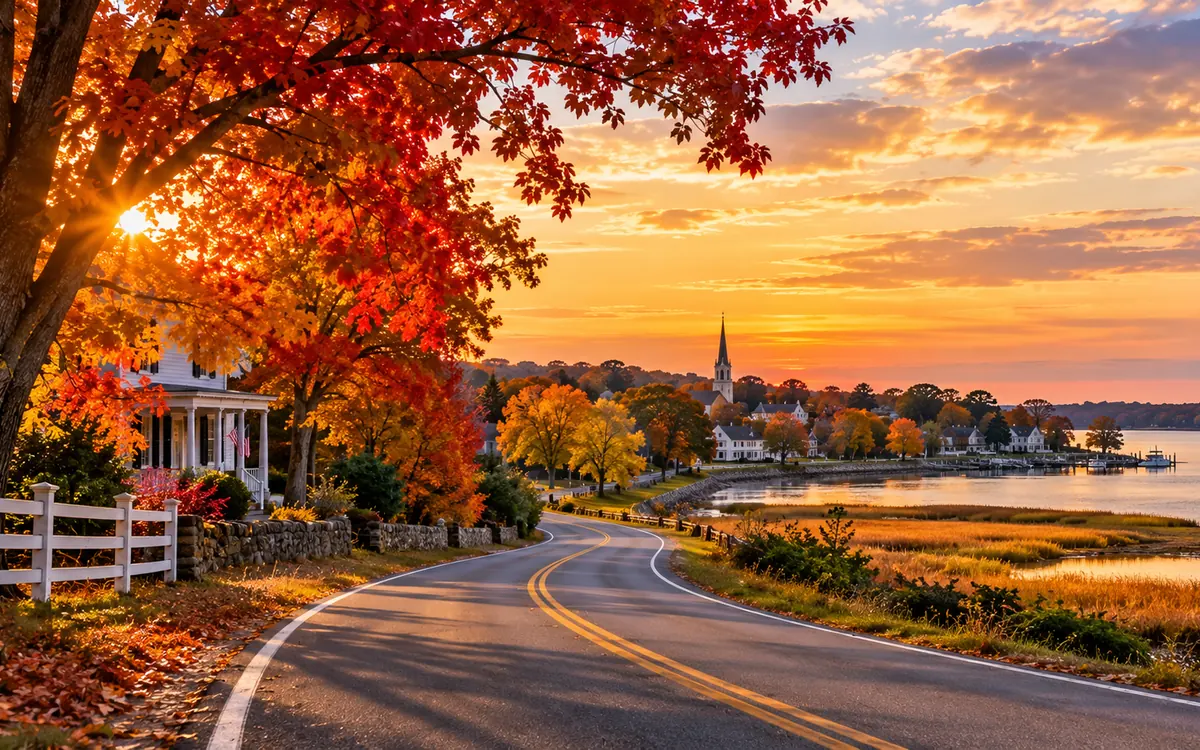
The best Route 17 fall trip depends on what you want
Virginia · Color and history
Winchester to Fredericksburg
Use the northern end of US 17 for a fall trip with Piedmont scenery, historic-town time and a weather backup. The strongest leaf color is not guaranteed to be right beside the road.
North Carolina · Rivers and waterfronts
Wilmington to Elizabeth City
Make Wilmington, New Bern, Edenton or Elizabeth City your base or anchor. Plan for riverside walks, downtowns and shorter days—not a continuous mountain-style foliage drive.
South Carolina and Georgia · Historic coast
Savannah to Charleston
Choose one historic-city stay and treat the Lowcountry as its own landscape of waterways, live oaks and marsh. Savannah and Charleston reward unhurried exploration more than a leaf-color chase.
Florida · Later-season escape
Punta Gorda to Jacksonville
Florida's Route 17 beginning is better approached as a warm-weather inland-and-coastal road trip. Fall here is a change in travel rhythm, not the same foliage event as inland Virginia.
Virginia: where fall color belongs in the conversation
For a trip actually centered on fall foliage, the most useful Route 17 chapter is its northern Virginia finish. Winchester is the highway’s northern terminus and a Shenandoah Valley gateway. The corridor toward Warrenton and the Fredericksburg area crosses a changing Piedmont landscape; the Yorktown-to-Winchester itinerary explains the actual road sequence in detail.
The important distinction: US 17 itself is not Skyline Drive, and a Shenandoah National Park excursion is a separate side trip. Do not build the day around a park overlook without checking its access, additional travel time and the return to the main highway. Historic downtowns and countryside can make a good weekend even when color is patchy.
For a southbound two-night plan, sleep near Winchester the first night, choose a deliberate Route 17 Piedmont drive the next day, and use Fredericksburg as a second base or turnaround. The Virginia fall itinerary helps decide where to concentrate your time rather than reproducing every route waypoint.
North Carolina: a quieter coastal-season choice
From the Cape Fear area toward the Inner Banks, Route 17 connects very different towns. Wilmington suits a larger city-and-riverfront visit; New Bern makes a historic riverside pause; Edenton rewards a slower downtown walk; and Elizabeth City carries the drive toward Virginia.
A fall weekend here is best planned around one base and one contrasting second stop, not a claim that the trees will change color in lockstep with the mountains. If beach or ferry excursions are added, mark them as off-route choices rather than part of US 17 itself. Start with the existing North Carolina trip guide for the main-road shape.
South Carolina and Georgia: historic streets, waterways, and marsh
The Savannah–Charleston chapter gives fall travelers a strong city-to-city decision. Savannah and Charleston are worth treating as destinations, with enough time for a long walk and an indoor weather alternative. Georgetown belongs to the northern Lowcountry chapter beyond Charleston; it is not an intermediate Savannah-to-Charleston stop.
South Carolina marshes, historic streets and tidal waterways look different from Appalachian autumn forests. Resist using a New England foliage photograph to promise a specific Lowcountry roadside view. The Charleston-to-Wilmington guide covers the Georgetown handoff separately from the Savannah-to-Charleston leg.
Florida: later-season travel rather than a foliage promise
Route 17 begins at Punta Gorda and heads inland through Florida before reaching Jacksonville. For a fall getaway, choose a small-town start, a manageable day of driving, and a coastal-city finish only if the total mileage makes sense. The Florida trip guide handles the real sequence.
Northern-state leaf forecasts do not translate to central or southwest Florida. Check current heat, rain, flood or tropical-weather forecasts, and destination access before committing. The Atlantic hurricane season officially runs through November 30; autumn dates are not an all-clear for coastal travel. See NOAA’s hurricane-season preparedness guidance.
Three trip shapes that work better than chasing the entire highway
| Time available | Better Route 17 choice | Travel rule |
|---|---|---|
| One full day | A Winchester–Warrenton or Fredericksburg-area local chapter | Choose one historic anchor and a modest driving loop; check how much of it is actually on US 17. |
| Two nights | Northern Virginia foliage-and-history or one Carolina/Lowcountry town pair | Sleep near one base, leave one day flexible, and avoid chasing multiple unrelated peak dates. |
| A longer trip | Two neighboring state chapters with a real overnight between them | Use the site trip guides for the highway spine; check seasonal conditions separately at each stop. |
Fall 2026 foliage check — reviewed October 9
The Virginia Department of Forestry’s October 8, 2026 weekly report describes uneven early color, with noticeable shifts in some mountain areas and many nearby trees still green. The Virginia State Parks October 8 foliage report likewise describes an evolving season, not a corridor-wide peak. Neither report is a live guarantee for US 17, Winchester, Warrenton or Fredericksburg on your future travel date.
The Forestry Department’s typical statewide pattern runs from higher western elevations to eastern areas later in October, but conditions vary with elevation, rainfall and weather. Recheck the most recent dated regional report before departure; treat the date above as a research snapshot, not an evergreen current-status panel.
What to verify before leaving
- Roads: Use Virginia 511 or the relevant state’s official traffic service for construction, incidents, routing changes and closures. A lovely overlook on a map may be a long side trip.
- Foliage: Read the publication date and geographic coverage of the local report; do not assume a nearby mountain or state park describes the color beside US 17.
- Weather: Check rain, wind and coastal or tropical hazards, including flood alerts. Shorter fall daylight matters on multi-stop days.
- Visits: Confirm operating hours, reservations, event dates and parking with the venue or local authority. No festival date is guaranteed by this article.
- Photography: Only stop in legal pullouts or parking areas; do not park in travel lanes or on a narrow shoulder for foliage photographs.
Keep exploring Route 17
Start with the Virginia fall road trip if leaves are your priority, open the Virginia itinerary if the exact route is your priority, or use the whole Route 17 overview to compare regions and mileage.
Planning references checked October 9, 2026: Virginia Department of Forestry, Virginia State Parks, Virginia 511, NOAA, and the published Route 17 state, trip and place guides. Exact conditions, access and opening hours should be reconfirmed before travel. What could change this advice: a new foliage report, a road closure, a tropical-weather warning, or updated venue access.